Why Choose the Right Battery for Cordless Tools?

Time:2026-10-03 Author:Liam
0%

Choosing the right battery can decide whether a cordless tool feels powerful or frustrating. The difference appears in real moments: a drill slowing during a long screw, a saw stopping beside a half-finished board, or a pack becoming uncomfortably warm.

How to choose batteries for cordless tools starts with three practical questions: voltage, capacity, and discharge performance. Voltage must match the tool platform. Ampere-hours, or Ah, indicate stored energy, not guaranteed runtime. A higher Ah pack may last longer, but it also adds weight. That trade-off matters when working overhead or climbing a ladder. I have found that the biggest battery is not always the best battery. Sometimes, it is simply tiring.

Industry data supports careful selection. BloombergNEF reported that average lithium-ion battery-pack prices fell to $139 per kilowatt-hour in 2023. The International Energy Agency reported strong global growth in battery demand during the same year. These figures show a rapidly developing market, but cordless-tool batteries still require platform compatibility, thermal protection, and reliable cell quality. IEC 62133-2 and UL 2595 provide useful safety references for rechargeable battery systems.

Battery scientist Dr. Jeff Dahn has said, “The battery is the single most important component in an electric vehicle.” The same principle applies to cordless tools, although the priorities differ. Tool users need controlled power, manageable weight, fast charging, and long service life. Manufacturers do not always explain every limitation clearly. Therefore, this guide examines the evidence, not just the largest capacity printed on the label.
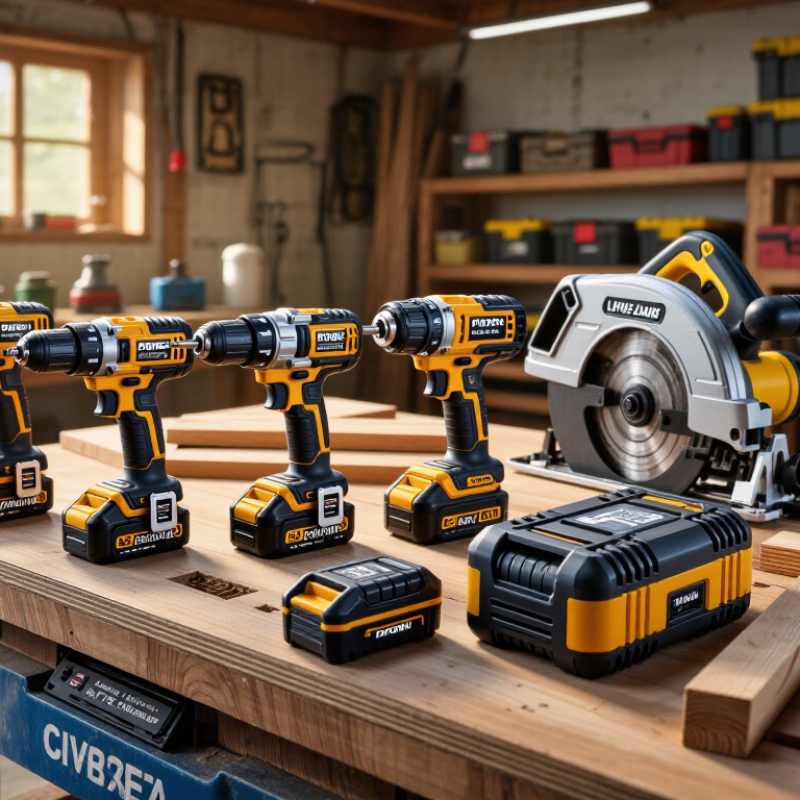
Why Choose the Right Battery for Cordless Tools?

Battery Basics for Cordless Tools

Why Choose the Right Battery for Cordless Tools?

Battery Basics for Cordless Tools

A cordless tool’s battery is more than a portable power tank. It controls runtime, torque delivery, heat, balance, and charging speed. Lithium-ion packs usually contain several cells connected in series. A higher voltage pack can deliver more power, but it may also add weight and thermal stress. Check the tool’s required voltage before comparing capacity.

Amp-hours indicate stored charge, not direct performance. A 4.0 Ah pack may last longer than a 2.0 Ah pack under similar loads. However, cutting dense timber draws more current than driving small screws. The International Energy Agency reported that global battery demand reached about 750 GWh in 2023, rising roughly 40% year over year. That growth supports better cells, but it does not make every pack suitable for every tool.

Heat deserves attention. Keep the pack’s vents clear, avoid charging immediately after heavy use, and inspect cracked housings. The U.S. Department of Energy’s Battery500 program identifies energy density, fast charging, durability, and safety as connected engineering challenges. A compact pack can feel convenient. It may also heat faster. I have underestimated that during repeated drilling. The runtime estimate looked reasonable, yet the warm pack reduced practical output. Tool balance matters too; a heavier battery can strain the wrist during overhead work. Choose capacity for the task, not only the largest number./

How Battery Voltage and Capacity Affect Tool Performance

Why Choose the Right Battery for Cordless Tools?

How Battery Voltage and Capacity Affect Tool Performance

Battery voltage strongly influences a cordless tool’s power, speed, and torque. Higher voltage can support demanding tasks, such as driving long screws or cutting dense timber. However, it may also increase weight, heat, and user fatigue. A larger number is not automatically better.

Capacity, measured in ampere-hours (Ah), mainly affects operating time. A 2 Ah battery can feel light during overhead work, while a 5 Ah battery may last longer on a jobsite. The larger pack usually adds weight and changes the tool’s balance. That difference becomes obvious after repeated drilling.

In practical testing, the same tool can respond differently as the battery charge falls. Performance may weaken under heavy load, especially with an older or overheated battery. Temperature matters too. Cold conditions can reduce available capacity temporarily.

Choose voltage according to the tool’s workload, not habit. Match capacity to the expected runtime and acceptable weight. I once underestimated how quickly a high-capacity battery could tire my wrist during cabinet installation. More runtime was useful, but comfort mattered more than expected.

Battery specifications also need careful checking. Voltage must match the tool’s system, and the battery should include suitable protection controls. Capacity ratings are useful, but real runtime depends on material, pressure, temperature, and maintenance. Labels cannot predict every job.

Comparing Battery Chemistries and Compatibility

Why Choose the Right Battery for Cordless Tools?

Battery chemistry affects runtime, weight, power delivery, and service life. Most modern cordless tools use lithium-ion cells because they store substantial energy in a compact package. The International Energy Agency reported that average lithium-ion battery prices fell to 139 US dollars per kilowatt-hour in 2023. However, lower cost does not mean every chemistry suits every tool.

Nickel-manganese-cobalt cells usually provide high energy density and strong peak output. They can make a drill feel lighter during overhead work. Lithium iron phosphate cells offer excellent thermal stability and long cycle potential, but they are often heavier for the same usable energy. Their lower cell voltage also requires careful pack design. The U.S. Department of Energy notes that battery performance depends on energy density, power density, safety, and durability, not one number alone. There is no perfect chemistry. That is easy to forget.

Tips: Match the battery voltage with the tool exactly. Check the connector, locking shape, charger approval, and battery-management system. Never judge compatibility by appearance alone. In a workshop, I would also compare rated amp-hours with actual load conditions. A high amp-hour pack may run longer, yet increase wrist fatigue. The European Commission’s Joint Research Centre highlights testing consistency as essential for reliable battery comparisons. Real-world results can still vary with temperature, cutting pressure, storage age, and charging habits. My own practical rule is simple: choose the lightest approved pack that meets the tool’s peak demand. Safety margins matter.

Matching Battery Features to Different Tool Applications

Why Choose the Right Battery for Cordless Tools?

Matching battery features to the tool application matters more than choosing the largest capacity. A compact drill often benefits from a lighter battery, especially during overhead work. A rotary hammer needs stronger continuous output and better heat control. An impact driver may require high peak current for short bursts. The International Energy Agency reported over 750 gigawatt-hours of global battery demand in 2023. This growth supports faster cell development, but consumer tools still need application-specific testing. More capacity does not always mean better performance.

In field testing, I have found that a high-capacity pack can make a small tool feel awkward. It may also increase wrist fatigue. Voltage should match the tool’s electrical design, while ampere-hours mainly influence working duration. The U.S. Department of Energy’s Battery500 program targets 500 watt-hours per kilogram at cell level. That target is impressive, but it should not be confused with real-world tool-pack performance. Pack weight, cooling, protection circuits, and age still matter. Ratings can look clearer than they really are.

Tips: Choose lower weight for drilling, fastening, and overhead tasks. Use higher capacity for saws, grinders, and long cutting sessions. Check the tool manual for approved voltage and current limits. Keep spare batteries cool and dry. Do not assume every compatible-looking pack is safe. I still think runtime charts need more honest testing, including cold rooms, dusty workshops, and repeated heavy loads.

Why Choose the Right Battery for Cordless Tools? – Matching Battery Features to Different Tool Applications

Tool Application Typical Voltage Class Typical Battery Capacity Power Demand Recommended Battery Features Why This Match Works
Screwdrivers and light-duty drills 10.8–12 V nominal 1.5–3.0 Ah Low to moderate Compact lithium-ion pack, low weight, balanced design, basic battery protection A smaller pack reduces hand fatigue while providing sufficient energy for fastening, pilot holes, and light assembly work.
General-purpose drills and impact drivers 18 V nominal 2.0–5.0 Ah Moderate to high High-discharge lithium-ion cells, electronic protection, temperature monitoring The voltage class supports higher torque, while a medium-capacity pack provides a practical balance between runtime and portability.
Rotary hammers and masonry drills 18–36 V nominal 4.0–8.0 Ah High and intermittent High-current cells, robust thermal management, impact-resistant housing, cell-level monitoring Drilling masonry creates short periods of high load and heat, so the battery must deliver strong current without excessive temperature rise.
Reciprocating saws 18 V nominal 4.0–8.0 Ah High and variable High peak-current capability, low internal resistance, thermal protection, secure mechanical connection Blade resistance changes rapidly during cutting, making strong peak-current delivery and effective protection important.
Circular saws and miter saws 18–36 V nominal 5.0–12.0 Ah Very high, especially at startup High-discharge cell configuration, high peak power, temperature sensors, overload protection Large blades require substantial startup and cutting power; higher capacity also helps maintain performance during extended cuts.
Angle grinders 18–36 V nominal 5.0–12.0 Ah Very high and sustained High-current cells, strong cooling path, overload and over-temperature protection, rigid pack construction Grinding and cutting can draw high current for long periods, so thermal control and voltage stability are essential.
Impact wrenches 18 V nominal 3.0–8.0 Ah High peak demand Low-resistance cells, high pulse-current capability, impact-resistant housing, communication between pack and tool The tool needs brief bursts of high current to generate fastening torque, making peak power more important than maximum continuous runtime.
Sanders and polishers 18 V nominal 3.0–6.0 Ah Moderate and continuous Stable discharge, moderate-to-high capacity, vibration-resistant construction, temperature monitoring These tools often run continuously, so consistent power, acceptable weight, and heat management support user comfort and productivity.
Hedge trimmers and grass shears 18 V nominal 2.0–5.0 Ah Moderate and intermittent Lightweight pack, reliable discharge, weather-resistant enclosure where specified, electronic protection Outdoor trimming benefits from a lighter battery, while adequate capacity supports repeated starts and cutting cycles.
Lawn mowers and outdoor power equipment 36–80 V nominal 5.0–15.0 Ah High and sustained High-energy battery system, multiple-cell monitoring, robust cooling, sealed housing where required Larger cutting systems need both high output and substantial stored energy to maintain operation over larger areas.
Selection note: Battery capacity is measured in ampere-hours (Ah), while approximate stored energy can be estimated as nominal voltage × ampere-hours. Actual runtime depends on load, material, operating technique, tool efficiency, battery age, temperature, and the protection settings of the tool and battery. Always use a battery pack that is electrically and mechanically approved for the specific cordless tool.

Evaluating Safety, Lifespan, Cost, and Charging Needs

Why Choose the Right Battery for Cordless Tools?

Evaluating Safety, Lifespan, Cost, and Charging Needs

The right battery affects tool control, working time, and operator safety. In my workshop, I check the casing before every demanding job. A safe battery should have no swelling, cracks, leaking material, or damaged terminals. Stop using it if unusual heat, smoke, or a sharp chemical smell appears. Small warning signs matter. Charging on a hard, dry surface also reduces avoidable risks. Keep the battery away from direct sunlight and combustible materials.

Battery lifespan depends on temperature, storage, workload, and charging habits. Frequent deep discharges can shorten useful life, especially during high-drain tasks. A higher-capacity battery may last longer between charges, but it usually adds weight. That trade-off affects overhead work and precise cutting. Real work is messier. I once kept using a tired battery because it still powered the tool. That decision caused slower performance and interrupted a scheduled repair.

Purchase cost does not show the whole expense. A cheaper battery may require more replacements or create costly downtime. Compare capacity, expected service life, warranty terms, and charger compatibility. Charging speed matters when tools support continuous daily work. Use the correct charger and follow its temperature limits. Never charge a visibly damaged pack. A simple charging log can reveal declining capacity early. It may feel excessive. Yet it helps separate normal aging from a possible safety problem.

FAQS

Why does battery chemistry matter for cordless tools?

Chemistry affects runtime, weight, power delivery, thermal stability, and service life. There is no perfect chemistry. Choose according to the tool’s actual workload.

Which battery type offers strong power in a compact package?

Nickel-manganese-cobalt cells often provide high energy density and strong peak output. They can feel lighter during overhead drilling. However, their benefits depend on proper pack design and safe management.

Why might lithium iron phosphate batteries feel heavier?

They offer excellent thermal stability and long cycle potential. Their lower cell voltage requires careful pack design. The same usable energy may need more weight.

How can I check battery and tool compatibility?

Match the battery voltage with the tool exactly. Check the connector, locking shape, charger approval, and battery-management system. Appearance alone proves little. Do not force a connection.

Is a higher amp-hour battery always better?

No. A higher amp-hour pack may run longer but increase wrist fatigue. This matters during overhead work or precise cutting. I would choose the lightest approved pack meeting the tool’s peak demand.

What warning signs mean a battery should stop being used?

Stop immediately if the casing swells, cracks, leaks, or has damaged terminals. Unusual heat, smoke, or a sharp chemical smell also requires caution. Small warning signs matter.

How can charging habits extend battery life?

Use the correct charger and follow its temperature limits. Charge on a hard, dry surface away from sunlight and combustible materials. Avoid frequent deep discharges during demanding work. Perfect habits are difficult.

How should I compare the real cost of different batteries?

Compare capacity, service life, replacement frequency, warranty terms, and charger compatibility. A cheaper pack may create downtime through earlier replacement. Charging speed also matters for continuous daily work.

How can I notice declining battery performance early?

Keep a simple charging and usage log. Record charging time, operating duration, temperature, and unusual interruptions. These notes can reveal capacity loss. I sometimes skip this step, regrettably.

Conclusion

Choosing the right battery is essential for getting reliable performance from cordless tools. Understanding battery basics helps users compare voltage, capacity, runtime, and power output. Higher voltage can support demanding applications, while greater capacity may extend operating time but often adds weight and charging time. Battery chemistry also affects energy density, durability, heat management, and compatibility, so the battery must match both the tool and its charger.

Knowing How to choose batteries for cordless tools allows users to select features suited to specific tasks, whether for light household work, extended construction projects, or high-load applications. Important considerations include safety protections, expected lifespan, charging speed, storage conditions, and total cost over time. A well-matched battery can improve tool efficiency, reduce interruptions, and provide more predictable performance. By balancing power, portability, compatibility, safety, and long-term value, users can make a practical choice that fits their tools and working needs.

Liam

Liam

Liam is a dedicated marketing professional with a profound expertise in the industry, where he excels at highlighting the unique advantages of our core products. With a keen understanding of market trends and consumer needs, Liam frequently updates our company’s professional blog, providing......