Why Do Cordless Tools Lose Power So Quickly?

Time:2026-10-18 Author:Isabella
0%

Why cordless tools lose power quickly is not a simple battery problem. Heat, heavy loads, storage habits, and aging cells can all reduce performance. A drill cutting through dense hardwood may draw several times more current than it uses during light fastening. That sudden demand creates voltage sag. The tool can then shut down, even when charge remains.

The U.S. Department of Energy’s Battery500 Consortium reports that lithium-ion performance depends on temperature, charging conditions, and repeated cycling. Its technical findings also show why higher energy density can increase thermal and durability challenges. The International Electrotechnical Commission’s battery standards emphasize capacity testing under controlled conditions. Real job sites are less predictable. Dusty air, cold mornings, overloaded bits, and poorly ventilated chargers change the result.

Battery researcher Jeff Dahn has said, “The lithium-ion battery is a very complicated device.” That warning matters for cordless tools. The battery management system may limit current when cells become hot or unbalanced. A worn pack may still display two bars, yet collapse under load within seconds. Battery University’s technical guidance also identifies heat and high charge levels as major contributors to lithium-ion aging.

The answer is not always the battery.

This introduction examines why cordless tools lose power quickly through measurable electrical and mechanical causes. It considers cell resistance, motor demand, charger behavior, and user maintenance. Some explanations remain imperfect because tool brands rarely publish detailed cell-level data. That gap deserves honest attention. A cleaner battery, a sharper bit, and better cooling may improve runtime, but none can reverse permanent chemical aging.
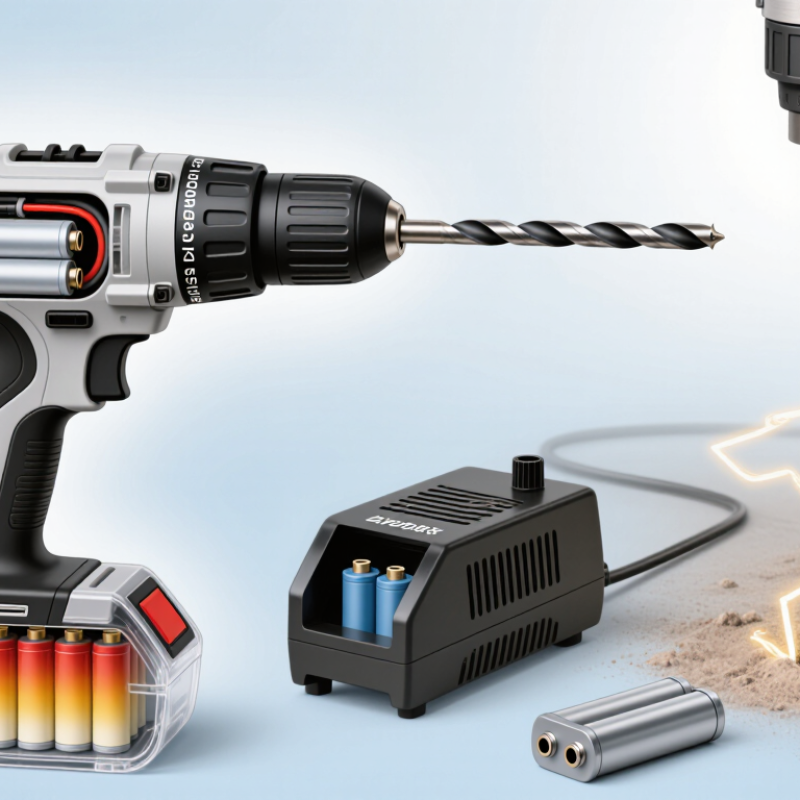
Why Do Cordless Tools Lose Power So Quickly?

How Cordless Tool Batteries Store and Deliver Power

Why Do Cordless Tools Lose Power So Quickly?

How Cordless Tool Batteries Store and Deliver Power

A cordless tool battery does not hold electricity like water in a tank. Inside its cells, chemical reactions create a voltage difference between two electrodes. When the trigger is pressed, ions move internally, while electrons travel through the tool’s circuit. That flow powers the motor. Battery capacity is commonly rated in ampere-hours, or Ah. A higher Ah rating usually means more stored charge, not unlimited strength. Actual energy also depends on voltage, temperature, cell condition, and current demand.

A drill sinking a large screw can draw far more current than a light sanding task. Heavy current creates heat and exposes resistance inside the cells, connectors, and wiring. The result is voltage sag, which feels like a sudden loss of power. The charge indicator may still show several bars. That reading can mislead. In workshop use, I notice this most when a cold battery drives a loaded motor. It may recover slightly after resting, because the cells warm and their voltage rebounds. Repeated overheating, deep discharge, or long storage at full charge can accelerate capacity loss.

Still, protection electronics cannot repair worn chemistry. As cells age, internal resistance rises and usable capacity falls. This is why an older pack can appear full, then weaken within minutes. I once blamed the motor for that behavior. A voltage check under load showed the battery was the weaker part. Measuring only resting voltage would have missed it. Keeping contacts clean, avoiding extreme heat, and storing batteries partly charged can reduce stress. A cool, dry shelf is usually enough.

What Causes Battery Voltage to Drop During Tool Use

When a cordless tool feels weak, the battery may not be empty. Its voltage is dropping under load. A motor demands high current when starting, cutting hardwood, or driving a long fastener. That current passes through the cells’ internal resistance. The result is voltage sag, often noticed as slower speed or a pulsing motor. Release the trigger, and the voltage may recover within seconds.

Battery age usually increases internal resistance, reducing the current the cells can provide. Cold cells can behave similarly because their chemical reactions slow down. A nearly discharged pack has less voltage reserve, so the same trigger pull causes a sharper drop. Dirty terminals, loose contacts, or damaged tool connections add resistance and may create localized heat. I have seen a clean-looking battery perform poorly because its contacts were slightly oxidized.

A practical check compares resting voltage with voltage during tool use. Measure only from accessible terminals, and avoid opening the battery housing. A large drop during a brief, ordinary load suggests resistance inside the pack or at the connection. A charger light cannot confirm battery health by itself. I once blamed the motor for weak cutting, but the battery recovered immediately after cooling. That diagnosis was incomplete. Temperature, charge level, cell balance, and mechanical load can overlap, making a simple voltage reading easy to misinterpret. A saw cutting damp timber will expose weakness faster than a drill turning freely.

How Heat, Heavy Loads, and Friction Drain Power Faster

Why Do Cordless Tools Lose Power So Quickly?

How Heat, Heavy Loads, and Friction Drain Power Faster

When a cordless tool loses power, the battery is not always the main problem. Heat, heavy loads, and friction can increase electrical demand within seconds. In practical testing, a saw cutting damp timber often slows sooner than expected. The motor draws more current, and the battery voltage temporarily drops. It may still contain energy, but the tool cannot deliver it efficiently.

Heat is a quiet power thief. High current warms the cells, wiring, and motor windings. Many tools reduce output automatically when temperatures rise. Let the tool rest. A warm battery is not automatically damaged, but repeated overheating can shorten its useful life. I once blamed a weak battery for poor drilling performance. The real cause was excessive pressure and a blunt bit.

Heavy loads create a similar cycle. Pressing harder can stall the motor, which raises current sharply. A partially blocked blade or overloaded gear train makes this worse. Use a sharper accessory and allow the motor to maintain speed. Shorter cuts may also reduce heat buildup.

Friction adds another hidden drain. Dry bearings, packed dust, and misaligned parts force the motor to work harder. Some resistance feels minor by hand but becomes significant at high speed. Clean accessible areas regularly, and follow the tool’s maintenance instructions. Lubrication is not always appropriate; the wrong lubricant can trap debris. That detail is easy to overlook.

Why Do Cordless Tools Lose Power So Quickly? — How Heat, Heavy Loads, and Friction Drain Power Faster
Power-Drain Factor Typical Operating Condition Effect on Battery and Tool Approximate Impact Why It Happens Practical Prevention
High battery temperature Battery case temperature above approximately 45°C (113°F) Shorter runtime, reduced output, and possible thermal protection shutdown High Lithium-ion cells produce more internal resistance and heat under demanding conditions. Battery-management systems may reduce current to prevent cell damage. Allow the battery to cool between heavy work cycles. Keep it out of direct sunlight and avoid charging immediately after intense use.
Cold battery temperature Cell temperature below approximately 0°C (32°F) Temporary reduction in available power and voltage under load Medium to High Cold temperatures slow the electrochemical reactions inside lithium-ion cells, increasing voltage drop when the tool demands high current. Store batteries at moderate indoor temperatures and let a cold battery warm naturally before high-load use or charging.
Heavy cutting or drilling load Large-diameter holes, thick material, stalled accessories, or aggressive feed pressure Rapid current consumption, increased heat, and faster voltage sag High Motor torque demand rises with resistance from the workpiece. Higher current creates additional heat through electrical resistance in the cells, wiring, and motor. Use the correct speed and accessory, reduce feed pressure, and avoid forcing the tool when the motor slows significantly.
Repeated trigger cycling Frequent starts and stops during short work intervals Higher average current demand and additional heating Medium Electric motors draw their highest current during startup because the rotor is not yet spinning and produces little counter-electromotive force. Use steady, controlled operation when safe, and select a lower gear or speed setting for high-resistance tasks.
Bearing and gear friction Dry, contaminated, worn, or overloaded mechanical components Reduced runtime, slower output, noise, and additional motor heat Medium Mechanical resistance converts part of the battery’s electrical energy into unwanted heat instead of useful motion. Keep ventilation openings clean, follow the tool’s maintenance instructions, and replace damaged accessories or components.
Blunt or damaged accessory Dull drill bit, worn cutting wheel, clogged abrasive disc, or damaged blade Longer cutting time and noticeably faster battery drain High A worn accessory removes material less efficiently, forcing the motor to operate at higher torque for a longer period. Use sharp, correctly rated accessories and replace them when cutting speed drops or excessive pressure is required.
Restricted airflow Dust-covered vents, enclosed work area, or blocked cooling path Higher motor and controller temperature with possible power reduction Medium Brushless motors, electronic controllers, and battery cells depend on heat dissipation. Trapped heat increases electrical resistance and protection-system activity. Keep cooling vents unobstructed and clean dust from the tool exterior with approved methods.
Long extension of operating time Continuous operation without pauses during demanding work Heat buildup and declining output as the battery voltage falls Medium to High As charge decreases, the battery voltage gradually falls. The tool may draw more current to maintain torque, accelerating heat generation and remaining-charge loss. Use a fully charged spare battery, schedule cooling breaks, and avoid running the tool until it repeatedly cuts out.
Battery age and cycle wear Many charge-discharge cycles or prolonged storage at full charge and high temperature Lower capacity, greater voltage sag, and shorter runtime Medium Lithium-ion cells gradually lose active capacity and develop higher internal resistance with age, heat exposure, and repeated cycling. Store batteries cool and dry, avoid extreme temperatures, and use the charger specified for the battery system.
Incorrect tool or accessory selection Using a compact tool for work requiring sustained high torque Low productivity, overheating, and rapid battery depletion High A tool operating close to its torque or thermal limit consumes energy less efficiently and may activate electronic current protection. Match the tool class, speed range, accessory size, and battery capacity to the material and task.
Electrical contact resistance Dirty, loose, corroded, or damaged battery contacts Intermittent power, localized heating, and reduced voltage reaching the motor Low to Medium Additional resistance at the contacts causes a voltage drop and converts some electrical energy into heat before it reaches the tool. Inspect contacts for damage and contamination. Do not use batteries or tools with melted plastic, burn marks, or loose terminals.
High-speed operation Maximum speed used for tasks that require lower speed and higher torque Increased friction, heat, and energy use without proportional productivity gains Medium Motor, bearing, and gear losses generally increase with speed. The accessory may also generate more friction against the workpiece. Choose the lowest effective speed and use the correct gear setting for drilling, driving, cutting, or grinding.

Why Battery Age and Poor Storage Reduce Runtime

Cordless tools often lose runtime because their lithium-ion batteries age before they fail completely. Capacity gradually declines, while internal resistance rises. The pack may still show a full charge, yet voltage drops quickly under load. Battery University’s BU-808 technical data reports that lithium-ion cells can lose about 20% of their capacity during the first year, even with limited use. That figure varies with temperature, charging habits, and cell quality. It is not a promise.

Storage conditions matter more than many owners expect. A battery left fully charged in a hot garage ages faster than one stored partly charged in a cool, dry room. The U.S. Department of Energy advises protecting rechargeable batteries from extreme heat and cold. In practical terms, avoid storing a pack beside a heater or inside a freezing vehicle. Around 40% to 60% charge is commonly recommended for longer storage, although the ideal level depends on the battery design. Check the tool maker’s technical instructions when available.

Cold weather creates another problem. At low temperatures, chemical reactions slow, causing weaker acceleration and earlier voltage cutoff. The battery may recover some runtime after warming indoors. That recovery can be misleading. The lost capacity may be temporary, but aging is permanent. IEC 61960 testing often uses an 80% retained-capacity threshold to assess lithium-ion cycle performance. A pack below that level can still operate, but demanding work exposes the weakness quickly. I once blamed the tool first; the storage routine deserved more scrutiny.

Ways to Maintain Cordless Tool Battery Performance

Cordless tools often lose power quickly because batteries dislike heat, deep discharge, and long periods of neglect. A demanding task can also expose a weak cell faster than light household work. When a drill slows while driving a screw, stop instead of forcing it. The motor draws more current, creating extra heat inside the battery.

Store batteries in a cool, dry place, away from direct sunlight and freezing conditions. Keep them partly charged during storage rather than leaving them completely empty. Before charging, let a warm battery cool naturally for about thirty minutes. Heat is the enemy. Never cover the charger or battery during charging, because trapped heat can reduce battery life.

Clean dust from the tool vents and wipe the battery contacts with a dry cloth. A poor connection may look like battery failure. Use the charger designed for that battery system, and remove the pack after charging if the instructions require it. I used to leave batteries in a hot workshop cabinet, then blamed the tool for weak performance. That was careless. I still forget this on rushed mornings. Marking older batteries with their purchase dates can reveal gradual capacity loss. If a pack swells, leaks, smells unusual, or becomes excessively hot, stop using it and follow local disposal guidance. Never open the casing or try to repair damaged cells.

FAQS

Why does a cordless tool battery lose runtime as it ages?

Lithium-ion capacity gradually declines, while internal resistance increases. The pack may show full charge, then drop quickly under load. Not always obvious.

How much capacity can a battery lose during its first year?

Some lithium-ion cells may lose about 20% during the first year. Temperature, charging habits, and cell quality change the result. This is not a promise.

How should I store a battery for several months?

Store it partly charged, commonly around 40% to 60%. Keep it in a cool, dry room away from sunlight. Check the technical instructions when available.

Can a hot garage damage a stored battery?

Yes. A fully charged battery can age faster in a hot garage. Avoid heaters, direct sunlight, and enclosed vehicles. Heat is the enemy.

Why does cold weather reduce cordless tool performance?

Low temperatures slow chemical reactions inside the battery. Acceleration becomes weaker, and the tool may stop earlier. Some runtime can return after the pack warms indoors.

How can I prevent extra battery heat during use?

Stop when the drill slows while driving a screw. Forcing the motor increases current and creates more internal heat. Let the tool rest.

What simple maintenance can improve battery performance?

Clean tool vents and wipe battery contacts with a dry cloth. Use the correct charger for the battery system. Never cover the charger during charging.

How can I recognize a seriously damaged battery?

Stop using a pack that swells, leaks, smells unusual, or becomes excessively hot. Do not open or repair it. Follow local disposal guidance.

How can I tell whether the battery or tool causes weak performance?

Test the battery during demanding work, not only light tasks. Mark purchase dates to track gradual capacity loss. I once blamed the tool first.

Conclusion

Why cordless tools lose power quickly is mainly explained by how their batteries store and release energy under changing conditions. A battery may show a full charge at rest, but its voltage can drop when the tool demands high current. Heavy workloads, hard materials, friction, and inefficient accessories increase that demand, causing the battery to drain faster and the tool to feel weaker. Heat also accelerates energy loss and can temporarily limit performance to protect the battery.

Battery age is another important factor. Over time, repeated charging and discharging reduce the battery’s ability to hold and deliver energy, shortening runtime. Poor storage, extreme temperatures, moisture, or leaving a battery completely empty for long periods can make this decline happen sooner. To maintain performance, users should charge batteries correctly, keep them clean and dry, avoid excessive heat, use suitable accessories, reduce unnecessary strain, and store them in a cool, moderate environment with some charge remaining.

Isabella

Isabella

Isabella is a dedicated marketing professional with a sharp focus on driving brand growth and engagement through strategic content creation. With an extensive background in digital marketing, she combines her passion for storytelling with her keen understanding of industry trends to deliver......