Why do lithium power tools overheat easily? The short answer is demanding work inside a compact housing. A cordless drill can draw high current while driving a large fastener, especially with a dull bit or a pinched accessory. That current produces heat in the cells, motor, and electronic controls. Dust-packed vents and repeated use leave less time for cooling. The handle may feel only warm while internal components are hotter.
Battery safety research helps explain the risk. Doughty and Roth’s peer-reviewed 2012 review in ECS Interface describes how lithium-ion cells respond to electrical, mechanical, and thermal abuse. It explains that excessive heat can accelerate harmful reactions inside a cell. IEC 62841-1 also provides general safety requirements and test methods for hand-held power tools, including temperature-related evaluation. These sources offer useful context, but they do not establish one overheating rate for every tool or battery model. That distinction matters.
In practice, heat often comes from several small factors together: heavy load, high ambient temperature, restricted airflow, an aging pack, or a long run without a break. The pattern can be subtle. A tool may slow down, smell unusually hot, or feel uncomfortable near the battery. Warmth alone does not prove a fault, though persistent heat deserves attention. This article examines the causes, the warning signs, and sensible ways to reduce heat buildup. The answer is not always obvious; even experienced users can overlook a blocked vent or worn accessory.
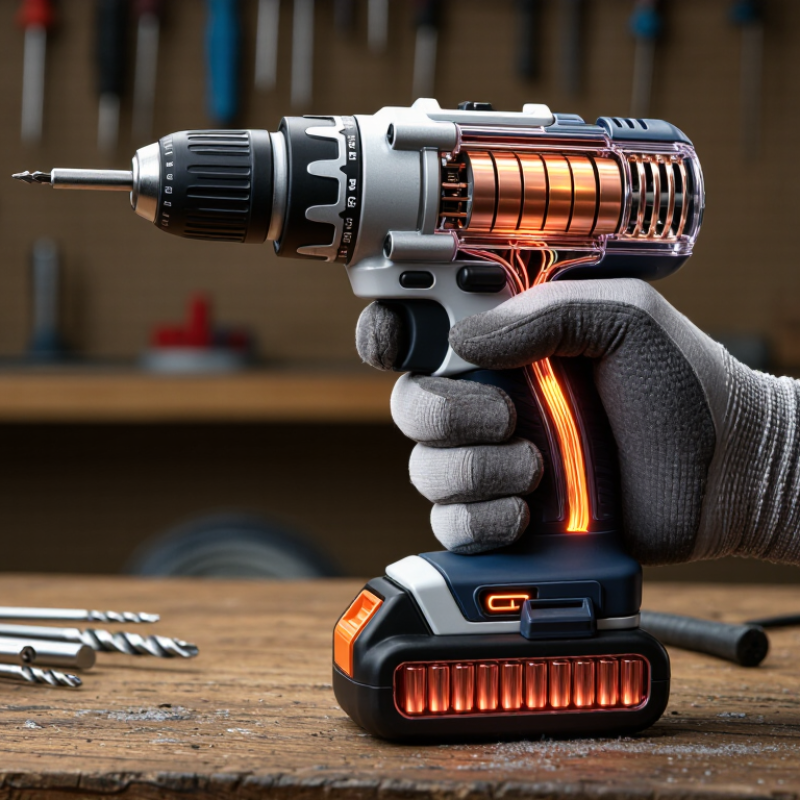
Heat in a lithium-ion power tool comes from several places, not just the battery. As current flows, resistance in the cells, wiring, and electrical contacts converts some energy into heat. The motor also warms up through resistance in its windings and magnetic losses. Friction adds more. A tight bearing or blunt drill bit can make the motor work harder.
Demand matters. Cutting dense wood or driving a large fastener draws more current than a light task. Higher current increases resistive heating, especially in the battery and motor. It is easy to blame the battery alone, but that explanation is often incomplete. Blocked vents, worn parts, and loose connections can contribute too. Heat builds up faster when cooling air cannot reach the tool’s internal parts.
Some warmth during heavy work is normal. Excessive heat is not. If the tool becomes unusually hot, smells burnt, slows down, or triggers a temperature warning, stop using it and let it cool naturally. Check the vents and accessory before resuming.
I might be overlooking how much working conditions vary, but a tool used in a hot, dusty space has less room to shed heat. Don’t ignore repeated overheating; it can signal a fault that needs inspection.
Lithium power tools can heat up when their batteries, motors, and controllers handle heavy electrical loads. A battery’s cells have internal resistance, so some energy becomes heat as current flows. High torque demands, a nearly empty battery, or repeated rapid starts can increase that load. Warmth after hard work is normal; a battery that becomes unusually hot deserves a pause. Heat matters.
Inside the motor, current flowing through copper windings produces heat, especially when the tool works slowly under pressure. Bearings and other moving parts add friction, while blocked vents can trap warm air around the motor. The controller also heats up. Its electronic switches regulate power to the motor, and both current flow and switching losses generate heat. A controller under sustained load may feel warm near the handle or battery connection.
In practical use, forcing a drill through a tough material can make all three systems work harder at once. I have found that short breaks help, though they do not fix a damaged battery or blocked airflow. Let the tool cool before charging, and keep vents clear of dust. If overheating repeats during light work, stop using the tool and check its manual or ask a qualified repair professional. Some heat patterns are hard to judge by touch alone.
Lithium power tools heat up quickly when they work near their limits. Driving long screws into hardwood or cutting dense material demands sustained current. A jammed bit or pinched blade adds sudden strain. The motor, electronic controller, and battery can all warm up. Short pauses help, but repeated bursts may not give them enough time to cool.
Airflow matters. Sawdust packed around vents, a dusty filter, or a tool left in direct sun traps heat. A hot workshop makes cooling slower, too. The casing may feel only warm while the battery is already hotter inside. That difference is easy to overlook. A blunt blade or wrong-size accessory can also make the tool work harder than expected.
Pay attention to changes in sound, reduced speed, or a battery that feels unusually hot. Stop using the tool and let it cool naturally in a dry, shaded place. Do not force it through a cut just to finish faster. Give it time. Avoid charging a hot battery; follow its care instructions and wait until it has cooled. Thermal shutdown is useful, but it should not become a normal work cycle. One imperfect habit is restarting as soon as the tool feels ready, without checking whether the battery has cooled as well.
Operating conditions that can increase overheating risk
High loads, stalled accessories, restricted airflow, and hot surroundings can increase heat buildup in the motor, electronics, and battery. The 0–10 scores are a qualitative comparison of relative risk, not laboratory measurements; actual heating varies by tool, battery, and conditions.
Tool design can trap heat before the battery itself becomes the main problem. A compact housing leaves little room for airflow, while a clogged vent or tightly packed motor adds resistance to cooling. During a heavy cut, a slowing blade or bit can make the motor draw more current. Because resistive heating rises with current squared, even a modest increase can produce noticeably more heat. Feel the difference: a warm grip after repeated cuts is not the same as a battery pack that stays hot while idle. Small detail, big clue.
Battery condition matters too. Aging cells can develop higher internal resistance, and an imbalanced pack may work harder under load. Battery University’s technical storage data estimates about 35% capacity loss after one year at 40°C and full charge, compared with about 20% at 25°C. These are storage estimates, not a prediction for every power-tool pack. Still, they show why heat and prolonged full-charge storage can shorten battery life. Let the pack cool between demanding jobs, keep vents clear, and stop using a tool if its pack remains unusually hot or performance suddenly drops. I may be oversimplifying: ambient heat, accessories, and workload all change the picture. A brief pause helps.
A lithium power tool may become warm during heavy cutting or drilling, but excessive heat deserves attention. Watch for a housing that feels unusually hot, slowing performance, a burning-plastic smell, or repeated thermal shutdowns. A battery that is swollen, leaking, or unusually hot is a separate warning sign. Stop using it. Do not charge or reuse a damaged pack.
Tips: Ease off the trigger and let the tool work at its intended pace. Clear dust from air vents, use a sharp bit or blade, and avoid forcing the tool through dense material. Set it down to cool in a dry, shaded place. Short breaks help.
Heat often builds when a tool runs under sustained load, has blocked airflow, or uses a battery outside its recommended conditions. Check the manual for operating and charging guidance, and let a hot battery cool before charging. Don’t cool it with water or place it in a refrigerator. If overheating keeps happening during light work, stop and arrange inspection by a qualified repair professional. I used to assume a hot casing meant the tool was failing; sometimes the workload was the real clue, though repeated heat still needs checking.
Current meets resistance in the battery cells, wiring, and contacts. The motor and controller also warm up.
Some warmth during heavy drilling or cutting is normal. A casing that feels unusually hot needs attention.
Watch for slowing performance, a burning smell, or repeated thermal shutdowns. Stop using it.
Dense wood, a blunt bit, tight bearings, or blocked vents can increase strain. Dusty, hot workspaces also limit cooling.
Ease off the trigger, use a sharp accessory, and clear dust from the vents. Short breaks help.
Stop using it and let it cool naturally. Do not charge or reuse a swollen, leaking, or damaged battery.
No. Let it cool in a dry, shaded place, and check the manual before charging.
Stop using it and arrange an inspection by a qualified repair professional. I might misjudge heat by touch alone, so repeated warnings matter.
Why do lithium power tools overheat easily? Heat is a natural byproduct of the energy moving through a tool’s battery, motor, and electronic controller. High current, electrical resistance, friction, and demanding work can all raise temperatures. Long periods of heavy use, blocked ventilation, high ambient temperatures, or using an unsuitable battery can make heat build up faster than the tool can release it.
Tool design and battery condition also matter. Worn or damaged cells, poor airflow, and inefficient components may increase operating temperatures. Common warning signs include a tool that feels unusually hot, reduced power, a burning smell, or an automatic shutdown. To reduce overheating, use the tool within its intended limits, allow it to cool between demanding tasks, keep air vents clear, and use a healthy, compatible battery. Stop working if the tool shows persistent heat or other signs of damage.
